

limits

Limits

Readings for today: Exodus 22-24

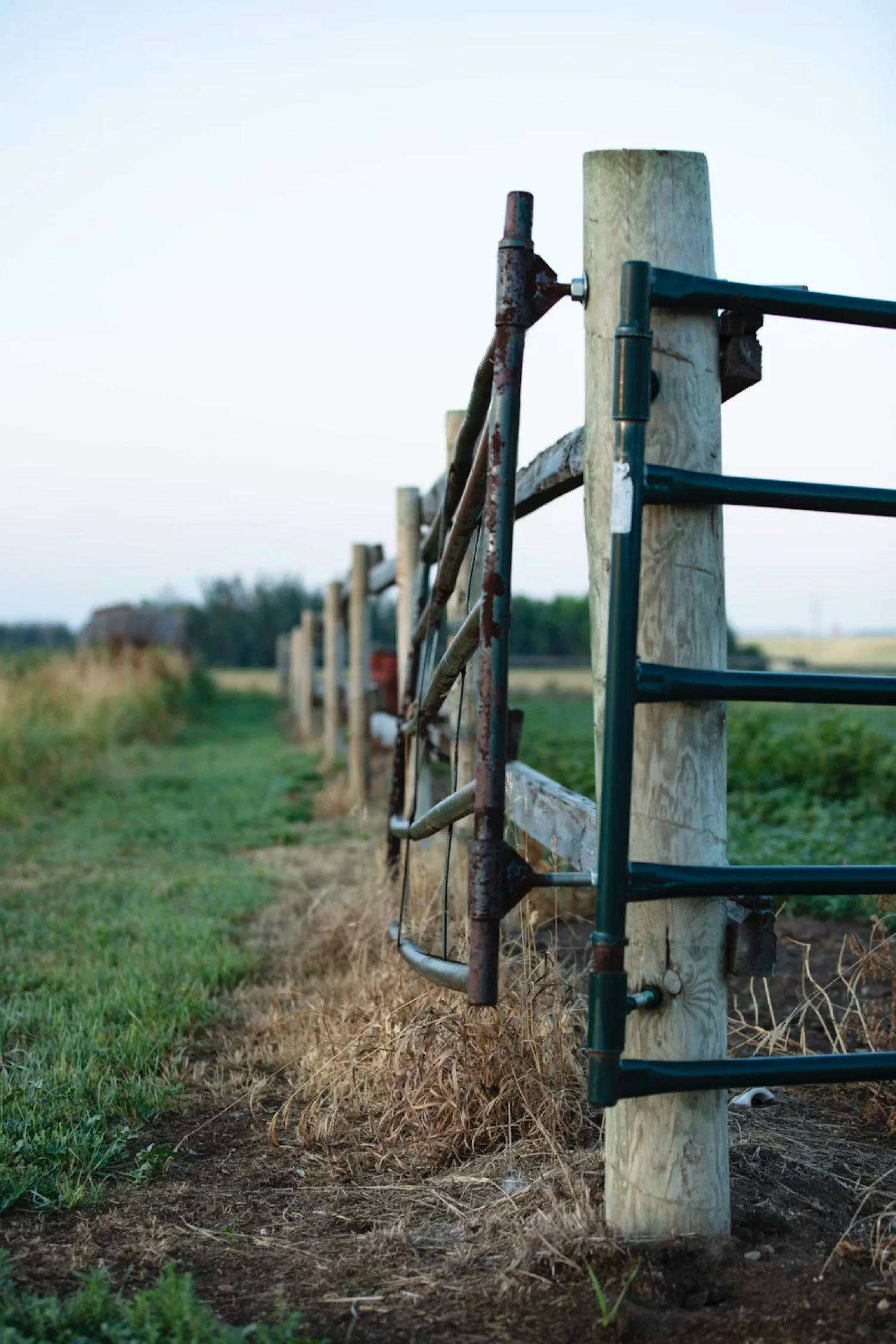
My family has owned farmland in Nebraska for generations. In fact, my great-great-great grandfather was one of the largest landowners in the state at one time. Over the years, the land has been divided up between kids, grandkids, great-grandkids, etc. However, I still had the privilege, when I was growing up, of going back to help with the planting and the harvest. I got to help run cattle in the pasture. I got to brand and feed and get them ready for market. Some of my fondest memories are spending early mornings with my grandfather on the feedlot. After my father died two years ago, my mom made the decision to sell the land. As we got the land ready for sale, we realized one of our neighbors up there had cattle who knocked down a fence and grazed in our corn land. So we had to work with her on restitution. It reminded me of what we read in Exodus today. “If a man grazes his livestock in a field or a vineyard, and he lets the livestock loose and they graze in the field of another man, he must make restitution from the best of his own field and the best of his own vineyard.” (Exodus‬ ‭22‬:‭5‬ ‭NET‬‬)

Laws establish boundaries. They determine the limits of human behavior. They govern commerce, property, relationships, etc. They are critical to the establishment of a nation. Especially in the ancient world where there were no limits on retribution. Nations cannot exist without laws. Communities cannot exist without boundaries. One must know where the lines fall so we know where and when we transgress and we need to know the consequences if/when those things happen. Healthy laws and boundaries are critical to creating the conditions under which human beings thrive. Without the rule of law, human beings suffer unimaginable horrors as evil is allowed to run amok. Sadly, I have seen this firsthand in some of the places I travel to every year.

Sometimes Christians can get caught up making a false dichotomy. We set “grace” and “law” in opposition to one another when the Bible lays them side by side. Jesus Himself says, “If you love Me, you will obey my commandments.” (John 14:15 NET) Clearly, it’s a “both/and” and not an “either/or.” Does that mean Christians are bound to keep the entirety of the Old Testament law? Not at all. We have to understand the law’s purpose. Some of the laws in the Bible are specific to the nation of Israel. Some of the laws are specific to the worship of Israel. Neither of these are in effect anymore as we don’t live in ancient Israel and Jesus fulfilled the ceremonial laws governing the worship of ancient Israel. What laws does that leave? The moral law. Laws like the Ten Commandments. These are still very much in force and actually reinforced by Jesus in the Sermon on the Mount. Embracing God’s law means embracing healthy limits and boundaries which, in turn, sets us free.

Readings for tomorrow: Exodus 25-28

Limits

Job 40:6-42:17, Psalm 29

Father, like yesterday, I want to learn to accept my place. Embrace my role. Understand my limits. In my pride, I tell myself I can do anything. But the reality is I am weak. I am finite. I am limited in so many ways. My limits too often lead to disappointment. But Father, you set these limits so that I might seek You. You create these limits that I might learn to depend on You. It is only through weakness that I discover the sufficiency of Your grace.

 One of the versions of the Bible that I love to read, especially when it comes to poetry, is the Message. The translator, Eugene Peterson, has this way of making the text come alive for me.  Listen to how He translates some of these final verses of Job…

“Look at the land beast, Behemoth. I created him as well as you. Grazing on grass, docile as a cow— Just look at the strength of his back, the powerful muscles of his belly. His tail sways like a cedar in the wind; his huge legs are like beech trees. His skeleton is made of steel, every bone in his body hard as steel. Most magnificent of all my creatures, but I still lead him around like a lamb! The grass-covered hills serve him meals, while field mice frolic in his shadow...And when the river rages he doesn’t budge, stolid and unperturbed even when the Jordan goes wild. But you’d never want him for a pet— you’d never be able to housebreak him!” (Job 40:15-24)

“Or can you pull in the sea beast, Leviathan, with a fly rod and stuff him in your creel? Can you lasso him with a rope, or snag him with an anchor? Will he beg you over and over for mercy, or flatter you with flowery speech? Will he apply for a job with you to run errands and serve you the rest of your life? Will you play with him as if he were a pet goldfish? Will you make him the mascot of the neighborhood children?...What hope would you have with such a creature? Why, one look at him would do you in! If you can’t hold your own against his glowering visage, how, then, do you expect to stand up to me? Who could confront me and get by with it? I’m in charge of all this—I run this universe!” (Job 41:1-11)

One of the reasons we read the Word of God is to be reminded of our place in this world. Reminded of how truly weak and finite and limited we are as human beings. You see, the reality is we too often act like we CAN tame Behemoth! We foolishly believe we can hook the Leviathan! We believe deep in our bones that nothing’s impossible for us as long as we set our best minds and best resources and best efforts towards a single goal. Remember what we read in Genesis 11 about the Tower of Babel? “And the Lord said, "Behold, they are one people, and they have all one language, and this is only the beginning of what they will do. And nothing that they propose to do will now be impossible for them.” (Genesis 11:6 ESV) We fundamentally believe - in our pride and arrogance - that we can ascend to heaven. We don’t need God. We can tame the world. Whether on a global, local, or even individual scale. 

The Bible reminds us of our limits. It reminds of the boundaries of our existence. They are good. They are right. They are important. So many people read Job and are frustrated that he gets no straight answer from God. But in expecting or even demanding such an answer, we make the same mistake Job made. We put God in the wrong. We condemn Him so that we may be in the right. (Job 40:8) Would that we learn to respond to God like Job did at the end. Repenting in dust and ashes before the Lord. Only then can we expect the Lord to restore our fortunes, heal our land, revive our nation. 

Readings for tomorrow: Exodus 1-4